
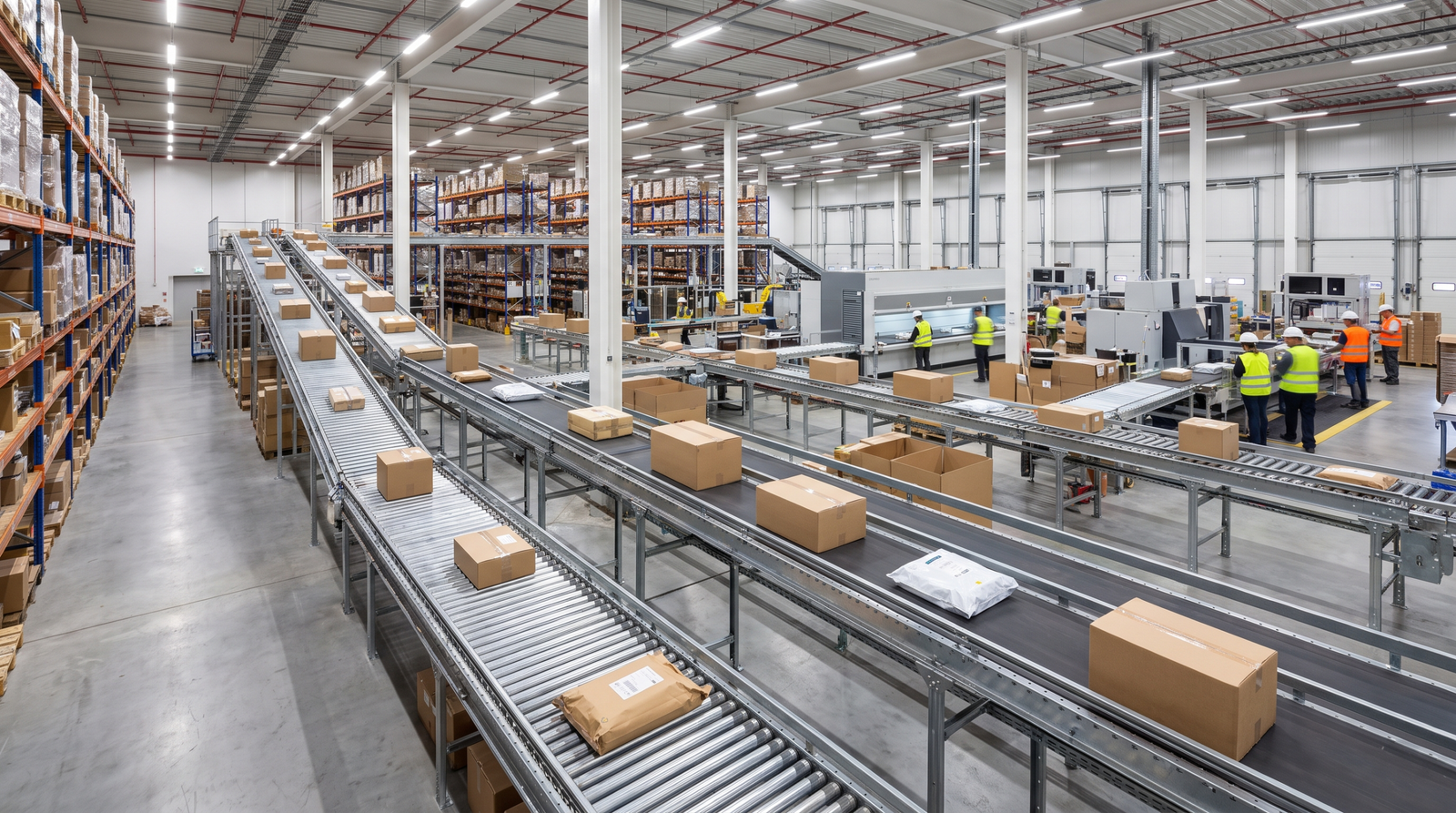
- Dubai CommerCity is the UAE's only free zone purpose-built around e-commerce, with integrated warehousing and delivery.
- Trade licence costs run AED 9,000-30,000; total first-year investment typically runs AED 30,000-70,000.
- CommerCity suits inventory-heavy retailers far more than dropshipping or print-on-demand businesses.
- CommerCity rarely wins on pure headline cost, since its infrastructure carries a genuine premium.
- Visa quota ties to the office or warehouse package, so headcount planning should inform package choice.
- Returns processing infrastructure deserves the same scrutiny as outbound fulfillment when comparing options.
Dubai CommerCity is the UAE’s only free zone built specifically around e-commerce, with trade licence costs running AED 9,000 to 30,000 depending on activity and package. Most businesses spend AED 30,000 to 70,000 in total first-year investment once licensing, visas, and operational setup are counted.
What sets it apart isn’t the price. It’s the integrated logistics, warehousing, and last-mile delivery infrastructure built into the zone itself.
This guide covers what CommerCity actually offers beyond a standard e-commerce licence, when its integrated infrastructure genuinely justifies choosing it, and how it compares to licensing e-commerce through a general-purpose free zone instead.
Why a dedicated e-commerce free zone exists at all
Most UAE free zones license e-commerce as one activity among many, alongside consulting, trading, and dozens of other business types. CommerCity was purpose-built around online retail specifically.
That specialization shows up in the physical infrastructure. Warehousing, packaging facilities, and last-mile delivery integration sit inside the zone itself, not sourced separately.
For a business genuinely built around inventory and fulfillment, this integration removes a layer of external logistics coordination a general-purpose free zone licence doesn’t provide, coordination that otherwise falls entirely on the founder to manage across separate vendors.
| Detail | What applies |
|---|---|
| Trade licence cost | AED 9,000 – 30,000, activity dependent |
| Total first-year investment (typical) | AED 30,000 – 70,000 |
| Minimum e-commerce site investment | From AED 15,000 |
| Core differentiator | Integrated warehousing, packaging, last-mile delivery |
| Best fit | Inventory-heavy online retailers with fulfillment needs |
“A general free zone gives you a licence to sell online. CommerCity gives you a licence plus the warehouse next door. Whether that’s worth paying for depends entirely on whether you’re actually holding inventory or just running a dropshipping storefront.”
Why this fits inventory-heavy retailers better than dropshippers
A business holding genuine physical inventory, needing warehousing, packaging, and reliable last-mile delivery, benefits most from CommerCity’s integrated infrastructure. The zone’s entire design assumes this operational model.
A dropshipping business with no physical inventory, sourcing directly from suppliers to customers without ever handling stock, gets considerably less value from CommerCity’s warehouse infrastructure specifically, since there’s no inventory to store there.
This distinction should drive the jurisdiction choice more than general brand appeal. A dropshipping business may find a lower-cost general free zone licence perfectly adequate, since it isn’t using the infrastructure CommerCity’s premium partly reflects.
Consider a founder launching a beauty products e-commerce brand holding significant physical inventory across multiple SKUs, requiring reliable warehousing and fast local delivery to compete with established players. CommerCity’s integrated logistics infrastructure directly addressed operational needs the founder would otherwise have had to source and coordinate separately across multiple third-party providers.
A different founder launching a print-on-demand apparel business, with no inventory held at any point since each order triggered production and direct shipping from a third-party manufacturer, chose a lower-cost general free zone instead. The print-on-demand founder correctly recognized that CommerCity’s core value proposition, warehousing and fulfillment, simply didn’t apply to a business model holding zero inventory.
How this compares to licensing e-commerce through a general-purpose free zone
A general-purpose free zone can license e-commerce activity at typically lower headline cost, without the warehousing infrastructure CommerCity provides. This suits any business not needing that physical fulfillment layer.
See our guide on e-commerce licensing in the UAE across mainland, free zone, or both for the broader comparison of licensing paths this specialized option sits alongside.
The decision ultimately comes down to whether the specific operational infrastructure CommerCity bundles into its offering is something the business would otherwise need to source and pay for separately anyway.
Why a business also trading physical goods beyond pure e-commerce should compare against general trading licensing
A business that combines online retail with broader wholesale or physical distribution activity may find its actual licensing needs extend beyond what a pure e-commerce-focused free zone like CommerCity is built around.
See our guide on UAE general trading licence requirements and what it covers for how that broader trading activity licence compares when e-commerce is only one channel among several a business actually operates.
How CommerCity compares against other free zones commonly chosen for online businesses
Founders researching online business setup frequently compare several free zones beyond CommerCity, each with its own cost and infrastructure tradeoffs. The right comparison depends on the specific operational needs of the business.
See our guide on the best free zone for an online business in the UAE for how CommerCity stacks up against these commonly considered alternatives for a genuinely online-first business model.
Why a separate warehouse licence elsewhere might work better for some models
A business already committed to a general-purpose free zone for its trade licence, but needing warehousing specifically, can sometimes source that separately through a dedicated warehouse and industrial free zone rather than relocating the entire licence to CommerCity.
See our guide on UAE free zone warehouse and industrial licence cost and JAFZA versus DAFZA for how this separate warehousing option compares when a business wants to keep its trade licence in one jurisdiction while sourcing physical storage elsewhere.
Why CommerCity rarely wins on pure headline cost alone
A founder purely optimizing for the lowest possible setup cost will generally find CommerCity’s pricing sits above the cheapest available UAE free zone options, since the integrated infrastructure carries its own cost premium.
See our guide on the cheapest UAE free zone to set up a company in 2026, ranked for how CommerCity’s cost position compares against options built purely around minimizing entry cost rather than bundling fulfillment infrastructure.
How CommerCity’s package structure affects visa and hiring plans
Like most UAE free zones, CommerCity ties visa sponsorship quota to the office or warehouse package a company chooses. An e-commerce business planning to hire warehouse staff, customer service teams, and fulfillment coordinators needs a package that actually supports that headcount from the outset.
Founders often underestimate how quickly an inventory-based e-commerce operation needs warehouse and fulfillment staff beyond the founding team itself. A package sized purely for the founder and one or two early hires can become a genuine bottleneck once order volume actually justifies a larger operational team.
Planning the realistic 12-to-24-month headcount trajectory before selecting a package tier avoids the disruptive mid-cycle upgrade many growing e-commerce businesses face when their initial package undersells their actual growth trajectory.
Why the true cost comparison needs to include what fulfillment would cost elsewhere
Comparing CommerCity’s licence cost directly against a cheaper general free zone’s licence cost, without factoring in what warehousing and last-mile delivery would cost to source independently elsewhere, understates CommerCity’s actual value proposition for an inventory-heavy business.
A founder should model the realistic all-in cost under each scenario: CommerCity’s bundled infrastructure cost versus a cheaper licence plus separately sourced third-party warehousing and delivery. The genuinely comparable numbers often narrow the apparent cost gap considerably.
This modeling exercise, done properly before committing to either path, produces a far more accurate picture than comparing headline licence fees alone, which is the comparison most founders default to without digging further.
Why last-mile delivery integration matters more as order volume scales
A small e-commerce operation shipping a handful of orders daily can manage last-mile delivery through standard courier arrangements without much operational strain. That changes considerably once order volume scales into the hundreds or thousands daily.
CommerCity’s integrated delivery infrastructure is specifically designed to handle this scaling challenge, coordinating fulfillment and delivery within a single operational ecosystem rather than requiring separate courier relationships and warehouse coordination as volume grows.
A founder anticipating genuine scale within the first two years should weigh this scaling advantage more heavily than a founder running a smaller, more boutique operation where standard courier arrangements will likely remain perfectly adequate throughout the business’s foreseeable growth trajectory.
Founders should also confirm packaging and branding customization options available within CommerCity’s facilities, since a business relying on distinctive unboxing experience as part of its brand identity needs to know whether the zone’s fulfillment infrastructure supports that level of customization or whether a separate arrangement is needed.
Why selling across multiple marketplaces adds its own operational wrinkle
Many e-commerce businesses today sell across their own branded storefront alongside third-party marketplaces, each with its own fulfillment integration requirements and, in some cases, its own warehousing preferences. A business’s licensing and infrastructure choice needs to account for this multi-channel reality, not just a single direct-to-consumer website.
CommerCity’s integrated logistics can generally support multi-channel fulfillment, but a founder should confirm specific marketplace integration compatibility before assuming any warehousing setup automatically works seamlessly across every sales channel the business intends to use.
This confirmation step is easy to skip during initial setup excitement but becomes a genuine operational headache later if a major marketplace’s fulfillment requirements don’t align cleanly with the warehousing and shipping setup already in place.
Founders should also factor seasonal demand spikes into their capacity planning discussions with CommerCity or any warehousing partner, since a facility that comfortably handles average daily volume can still struggle during major sales events unless capacity has genuinely been stress-tested against realistic peak scenarios in advance.
Why returns processing infrastructure deserves as much attention as outbound fulfillment
E-commerce businesses, particularly in categories like apparel and beauty with naturally higher return rates, need genuine returns processing capability, not just outbound shipping infrastructure. Reverse logistics is often an afterthought in initial jurisdiction planning, despite being a substantial ongoing operational cost.
A free zone’s warehousing infrastructure that handles outbound fulfillment well doesn’t automatically mean equally efficient returns processing. Founders in return-heavy categories should specifically confirm how returns get processed, restocked, or disposed of within whatever infrastructure they choose.
Getting this wrong doesn’t show up immediately at launch. It shows up months later as returns volume grows and an under-planned reverse logistics process starts eating into margins that outbound-focused cost modeling never accounted for.
Asking any prospective free zone or warehousing partner directly how returns are handled, not just how outbound orders are fulfilled, is a simple question that surfaces this gap early, before it becomes an expensive lesson learned the hard way months into operation.
Common mistakes when choosing an e-commerce free zone
- Choosing CommerCity for its brand recognition without confirming the business model actually uses its warehousing infrastructure.
- Assuming a dropshipping or print-on-demand business benefits equally from CommerCity’s fulfillment-focused setup.
- Comparing free zones purely on licence cost without accounting for infrastructure the business would otherwise source separately.
- Overlooking that a business combining e-commerce with broader trading activity may need a different licence type entirely.
When professional help is worth it
A founder with a clear, inventory-light dropshipping model can often choose a lower-cost general free zone directly. Where guidance is worth the cost is any business genuinely uncertain whether its fulfillment needs justify CommerCity’s infrastructure premium, since that decision affects both setup cost and ongoing operational efficiency for years.
Use our interactive free zone comparison tool to compare CommerCity against other options based on your specific e-commerce operating model before committing to a jurisdiction.
Frequently asked questions
What makes Dubai CommerCity different from other UAE free zones?
It is purpose-built specifically for e-commerce, with integrated warehousing, packaging, and last-mile delivery infrastructure built into the zone itself.
Is CommerCity worth it for a dropshipping business?
Generally not, since dropshipping businesses hold no inventory and gain little from CommerCity's warehousing infrastructure, which is the zone's core value proposition.
How much does a Dubai CommerCity trade licence cost?
Trade licence costs typically run AED 9,000 to 30,000 depending on activity, with total first-year investment usually landing between AED 30,000 and 70,000.
Is CommerCity the cheapest option for an e-commerce business?
No. CommerCity generally costs more than the cheapest available UAE free zones, since its bundled logistics infrastructure carries its own premium.
Does CommerCity support selling across multiple marketplaces?
Generally yes, though founders should confirm specific marketplace integration compatibility before assuming any warehousing setup works seamlessly across every sales channel.
Talk to a setup advisor
Free 20-minute call to confirm the right structure for your business.
Related Reading
 Free Zone Company Setup
 DIFC vs ADGM: Which Free Zone Actually Fits a Fintech or Asset Management Business
 Free Zone Company Setup
 DMCC Company Setup: Cost, Process, and What the Jump Start Package Covers
 Free Zone Company Setup
 SPC Free Zone Licence Cost: What You Actually Pay in Sharjah
 Free Zone Company Setup