
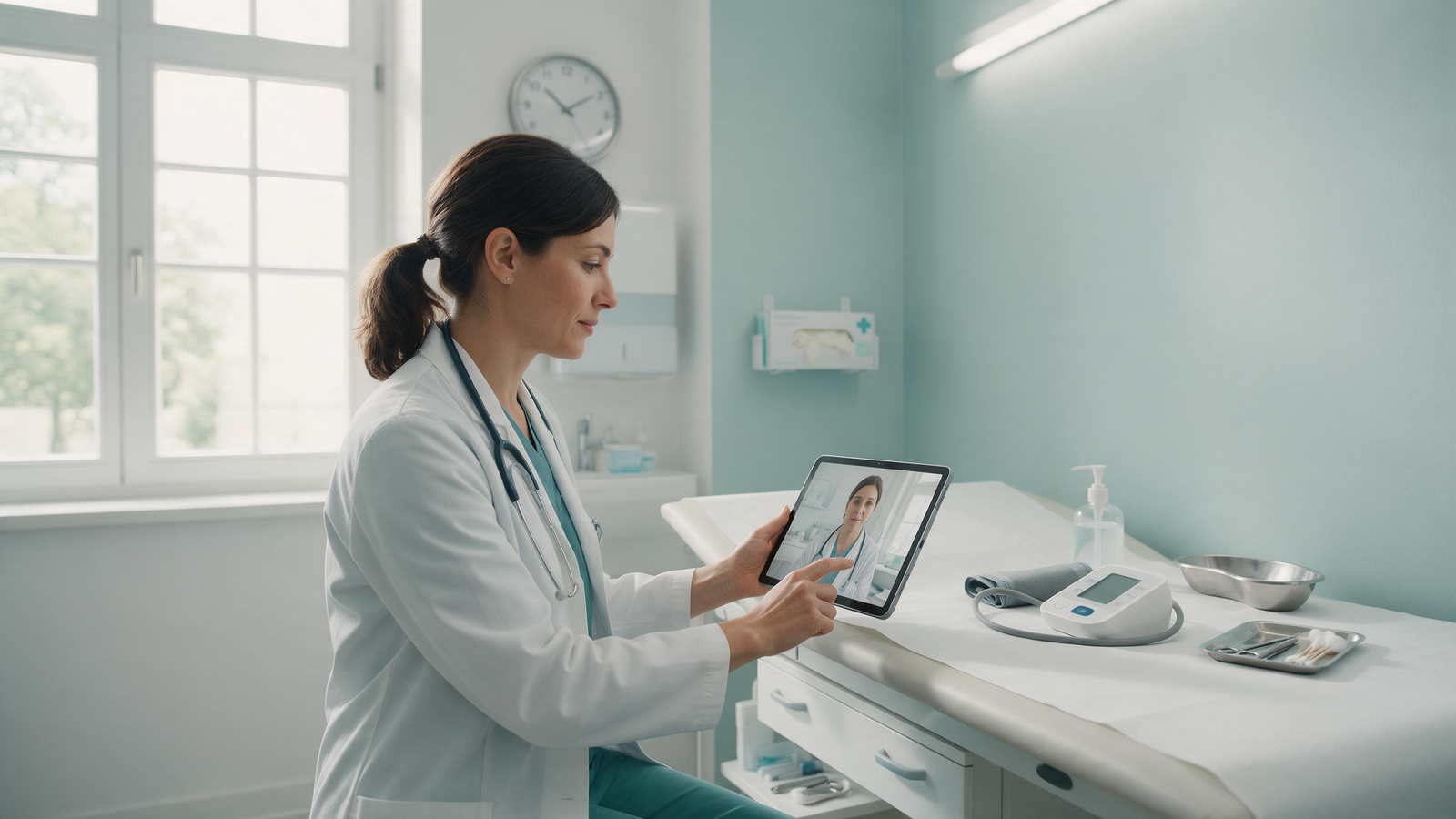
- There is no separate telemedicine licence; the practitioner's existing licence already covers remote consultation
- The health facility itself must separately hold telehealth authorisation
- The patient's physical location during consultation decides which regulator's rules apply
- Platforms must meet strict technical requirements including UAE-based servers and ISO 27001-level certification
- AI-assisted clinical tools must be validated and disclosed to patients directly
- A platform relying on third-party clinical partners needs its own ongoing due diligence process
There is no separate telemedicine licence to apply for in the UAE. A practitioner’s existing professional licence already covers remote consultations, but the health facility through which they practise must separately hold telehealth authorisation from its own regulator.
Which regulator’s rules actually apply depends on the patient’s physical location during the consultation, not the practitioner’s own licensing emirate.
This guide covers how telehealth licensing actually works across the UAE’s multiple regulators, what a digital health platform needs technically, and where founders most often misunderstand this cross-emirate structure.
Why founders keep assuming a dedicated telemedicine licence exists
Many founders entering digital health naturally expect a specific, named telemedicine licence, similar to how a crypto business expects a specific VASP licence. The UAE’s actual structure works differently.
A doctor’s existing professional medical licence already authorizes remote consultation as part of standard clinical practice. What genuinely needs separate authorisation is the facility itself, which must hold telehealth authorisation from its regulator.
A founder building a platform around licensed practitioners needs to understand this distinction clearly before assuming any single approval covers the entire operation.
| Detail | What applies |
|---|---|
| Practitioner licensing | Existing professional licence already covers remote consultation |
| Facility requirement | Telehealth authorisation held separately by the health facility |
| Federal regulator | MOHAP, which also directly regulates the Northern Emirates |
| Governing rule | Patient’s physical location during consultation determines applicable regulator |
| Technical baseline | Encryption in transit and at rest, MFA, ISO 27001-level certification, UAE-based servers |
“A DHA-licensed practitioner consulting a patient who happens to be physically in Abu Dhabi that day needs to comply with DOH rules for that specific consultation, not the practitioner’s own home emirate rules.”
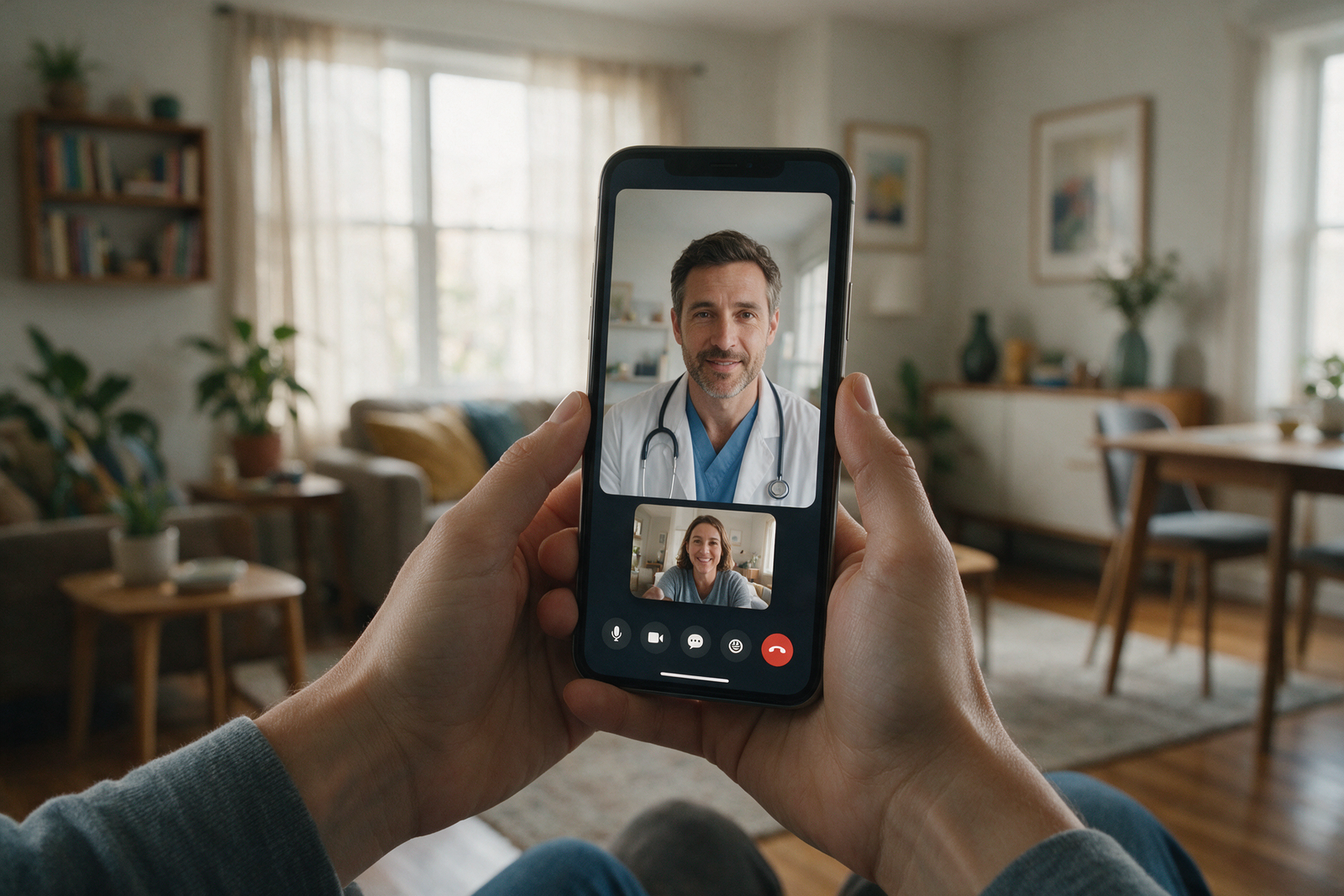
Why the patient’s physical location decides more than founders expect
MOHAP sets the federal baseline and directly regulates the Northern Emirates: Sharjah, Ajman, Ras Al Khaimah, Umm Al Quwain, and Fujairah. Dubai and Abu Dhabi each maintain their own separate health regulators.
The working principle across the UAE in 2026 is that the patient’s physical location during the consultation decides which authority’s specific rules govern that interaction, not where the practitioner or platform is licensed.
A platform serving patients across multiple emirates needs genuine multi-regulator compliance built into its operating model, not a single-emirate compliance approach stretched across the whole country.
Consider a telehealth platform founder who built the entire compliance framework around Dubai Health Authority rules, assuming this single framework would cover every consultation the platform facilitated regardless of where a given patient happened to be located.
A compliance review ahead of a funding round flagged that a meaningful share of the platform’s patient base was physically located in Abu Dhabi and the Northern Emirates during consultations, requiring the founder to build out DOH and MOHAP-specific compliance layers that had been entirely missing from the original single-regulator design.
Why the technical bar for a telehealth platform is genuinely high
Platforms must encrypt patient data both in transit and at rest, implement multi-factor authentication, and hold recognized security certification such as ISO 27001. Servers must be located inside the UAE.
Interfaces must work properly in both Arabic and English, and the platform must integrate with the relevant emirate’s health information exchange, NABIDH in Dubai, Malaffi in Abu Dhabi, and Riyati for MOHAP-regulated facilities.
A founder underestimating this integration requirement risks a platform that looks technically complete but cannot actually operate compliantly once launched against real regulatory review.
Why AI-assisted clinical tools carry their own separate disclosure obligation
Health regulators including MOHAP and free zone health authorities have indicated that AI tools used in clinical decision-making must be validated and disclosed to patients directly, not simply embedded silently into the platform’s workflow.
A founder building AI-assisted diagnostic or triage features needs to plan for this disclosure requirement from the product design stage, rather than treating it as a late-stage compliance addition.
This is an area regulators are actively watching closely as digital health platforms increasingly build AI into core clinical workflows.
Why PDPL compliance sits alongside, not instead of, health-specific data rules
A telehealth platform handling patient identity, medical history, and consultation records sits within UAE PDPL’s highest-attention category given the sensitivity and volume of personal data typically involved.
See our guide on what UAE PDPL compliance genuinely demands in 2026 for the broader data protection framework a telehealth platform needs to satisfy alongside its health-specific regulatory obligations.
Why licensing jurisdiction choice matters more for a healthtech platform than most online businesses
A founder choosing where to license a digital health platform should weigh free zone health-specific infrastructure against mainland licensing more carefully than a typical online business would, given the additional regulatory integration this sector requires.
See our guide on how UAE free zones compare for an online-first venture for how this jurisdiction choice interacts with a healthtech platform’s specific compliance needs.
Why healthtech platforms targeting government or hospital clients face an added credibility layer
A digital health platform seeking contracts with government-linked hospitals or public health institutions faces the same kind of layered credibility expectations other regulated sectors already navigate, licensing plus broader signals like ICV certification.
See our guide on why ICV certification affects UAE government contract chances for how this separate credibility signal might factor into a healthtech platform’s institutional sales strategy.
Why professional liability insurance needs its own careful review for a telehealth model
A telehealth platform’s liability exposure differs from a traditional clinic’s, given the remote nature of consultations and the multi-regulator compliance landscape a platform operating across emirates actually faces.
A founder should work with an insurance provider genuinely familiar with digital health risk specifically, rather than assuming a standard clinical malpractice policy adequately covers this different risk profile.
Getting this coverage right early avoids a founder discovering a critical gap only after an actual claim arises.
Why beneficial ownership filing applies to a healthtech platform just like any other company
A founder focused entirely on clinical and technical compliance can easily overlook that a healthtech platform’s underlying UAE entity still carries the same beneficial ownership disclosure obligation as any other business.
See our guide on what beneficial ownership disclosure actually requires in the UAE for this fully active obligation that applies regardless of how heavily regulated the platform’s clinical side already is.
Why hiring licensed clinicians involves its own separate employment compliance layer
A telehealth platform employing or contracting licensed practitioners directly needs to manage that employment relationship correctly, on top of the platform’s own facility-level telehealth authorisation.
See our guide on what it actually costs to hire a first employee in the UAE for the broader employment cost picture a healthtech platform needs to budget for once it moves beyond contracting individual practitioners informally.
Why a healthtech platform’s compliance checklist looks longer than most other online businesses
A founder building a digital health platform should expect a genuinely longer standing compliance checklist than a typical online business, given the layered facility authorisation, data protection, and multi-emirate regulatory obligations covered here.
See our guide on what a serious UAE compliance checklist actually includes for how these healthtech-specific obligations should sit alongside the standard compliance items every UAE company already tracks.
Why verifying a patient’s physical location at consultation time is harder than it sounds
A platform relying purely on a patient’s registered home address to determine the applicable regulator risks a genuine compliance gap, since a patient’s actual physical location at the moment of consultation can differ from their registered address in ways that matter legally.
Building a simple, honest location confirmation step into the consultation flow itself, asking the patient directly where they currently are rather than assuming based on registration data, closes this gap with relatively little added friction.
A platform that skips this step and defends its regulatory position purely on registered address data may find that defense considerably weaker if a specific consultation is ever reviewed closely by a regulator.
This small workflow addition is a low-cost way to genuinely strengthen a platform’s compliance posture across every single consultation it facilitates, not just the ones that happen to draw regulatory attention.

Why a platform relying on third-party clinical partners needs its own due diligence process
A founder building a platform that connects patients to independently licensed clinics or practitioners, rather than employing clinicians directly, still carries responsibility for confirming each partner’s licensing and telehealth authorisation status genuinely holds up.
A simple, standing due diligence checklist, confirming a partner’s professional licence, facility telehealth authorisation, and relevant emirate-specific approvals before onboarding, protects the platform from inheriting a partner’s compliance gap as its own.
This checklist should be revisited periodically for each partner, not just confirmed once at initial onboarding, since a partner’s own licensing status can lapse or change without necessarily notifying every platform it works with.
A platform that skips this ongoing verification risks discovering a partner’s compliance gap only after a patient complaint or regulatory inquiry forces the question, a considerably worse position than catching it through routine due diligence beforehand.
A founder should also plan for how patient consent and data retention rules interact across the different emirate-specific health information exchanges a multi-emirate platform integrates with, since consent language that satisfies one exchange may not automatically satisfy another.
Building a single, comprehensive consent flow that meets the strictest applicable standard across all integrated exchanges is generally simpler to maintain than running several parallel consent processes tailored to each individual regulator.
A founder should also confirm how a platform’s incident response plan handles a data breach affecting patients across more than one emirate, since notification obligations can differ by regulator even for a single underlying security incident.
A founder should also review how session recording and storage practices differ across the health information exchanges a platform integrates with, since retention periods and access permissions are not always uniform across NABIDH, Malaffi, and Riyati.
Common mistakes when approaching UAE telemedicine and digital health licensing
- Assuming a single dedicated telemedicine licence exists rather than understanding the practitioner-plus-facility structure.
- Building compliance around only one emirate’s regulator while serving patients located elsewhere.
- Embedding AI clinical tools without the required patient-facing disclosure.
- Assuming standard clinical malpractice insurance adequately covers a remote-first telehealth model.
When professional help is worth it
A founder launching a single-emirate telehealth service with a clear regulatory path can often work directly with that emirate’s health authority. Where guidance is worth the cost is any platform planning multi-emirate operation, AI-assisted clinical features, or institutional healthcare clients, since these are exactly where the compliance layering gets complex.
the e.zone team behind healthtech licensing can map exactly which regulators your specific platform needs to satisfy. See e.zone’s guide on why UAE banks ask about source of funds for a related consideration once a healthtech platform starts processing patient payments at scale.
A founder planning expansion beyond a single emirate should raise this multi-regulator question early in the planning process, rather than treating it as a detail to resolve only once the platform is already live and serving patients.
Frequently asked questions
Is there a separate telemedicine licence in the UAE?
No, a practitioner's existing professional licence already covers remote consultation, but the facility itself needs separate telehealth authorisation.
Which regulator applies to a telehealth consultation?
The patient's physical location at the time of consultation determines which regulator's rules apply, not the practitioner's home emirate.
What technical requirements do telehealth platforms need to meet?
Encryption in transit and at rest, multi-factor authentication, ISO 27001-level certification, and UAE-based servers.
Do AI clinical tools need special disclosure?
Yes, AI tools used in clinical decision-making must be validated and disclosed to patients directly.
Does a platform need to vet its clinical partners?
Yes, a platform connecting patients to independent clinics or practitioners still needs ongoing due diligence on each partner's licensing status.
Talk to a setup advisor
Free 20-minute call to confirm the right structure for your business.
Related Reading
 Industry-Specific Licensing
 Dubai Contractor Licensing Law 2026: Mandatory Registration Under Law No. 7 of 2025
 Industry-Specific Licensing
 UAE Advertiser Permit 2026: Who Needs One and Why Unpaid Doesn't Exempt You
 Industry-Specific Licensing
 KHDA's 2026 Compliance Handbooks: 24-Hour Inspection Notice Explained
 Industry-Specific Licensing